Turning Survival into Action: One Athlete’s Fight for Cardiac Safety
March 30, 2026
On July 7, 2023, fifteen-year-old Canen Dickman was doing what he loved: training as a four-sport athlete during a soccer conditioning practice. But halfway through a two-mile time trial, the unthinkable happened… Canen suffered a sudden cardiac arrest and collapsed on the track.
While many told Canen he was “lucky” to be alive, he sees it differently. His survival was the direct result of a deliberate emergency action plan executed by trained individuals who knew exactly how to respond in a crisis.
The moment Canen collapsed, his coaches instantly jumped into action, relying on the training they had taken seriously. In a coordinated response, Coach Sprunger began administering CPR while Coach Fagan ran into the building to retrieve an automated external defibrillator (AED), all while student-athletes called 911. This critical link in the chain of survival allowed the coaches to apply the AED and administer a life-saving shock before paramedics arrived to take over.
“It’s not about luck; it’s about being prepared with an action plan.” — Canen Dickman. Read the rest of Canen’s story here.
A Voice for Survival: From Columbus to D.C.
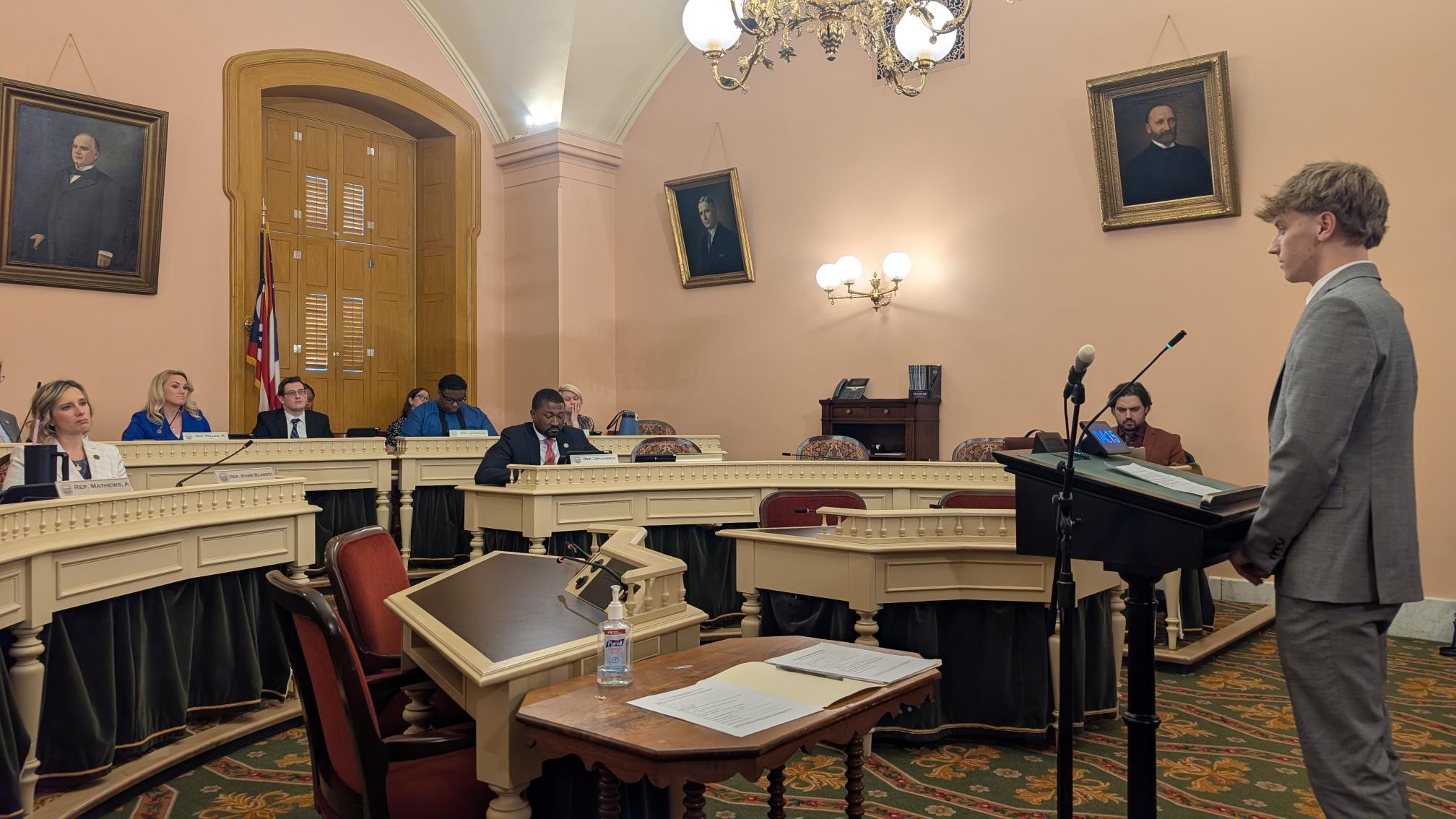
Canen is now turning his personal experience into a powerful platform for advocacy, ensuring his story creates a lasting impact on public health policy. Recently, he stood before the House Art, Athletics, and Tourism Committee in Columbus to provide proponent testimony for HB 687. His efforts, however, extend far beyond the state capital; Canen also joined the American Heart Association in Washington, D.C., for the Hearts on the Hill lobby days. By sharing his journey with national lawmakers, he is helping to champion federal support for cardiac arrest preparedness and heart health awareness.

HB 687 aims to ensure that no athlete’s life is left to chance by requiring robust safety standards across Ohio. The bill proposes critical updates to the Revised Code to protect participants at schools and recreation areas. Under HB 687, AEDs would be required at schools and school-related locations, as well as at sports and recreation locations during organized youth activities. Additionally, the bill ensures that staff members are trained in CPR and AED use and requires facilities to adopt and practice emergency action plans (EAPs) annually. By tasking the Department of Health with developing a model EAP based on national cardiovascular care standards, Ohio can ensure that every second counts when a life is on the line.
For every minute that passes without intervention after a sudden cardiac arrest, the survival rate drops by 10%. Because Canen’s coaches were prepared and took their action plan seriously, he is here today to continue to advocate for the safety of every other student-athlete in the state.