Minutes Matter: Bringing Lifesaving Priorities to the Capitol
May 11, 2026
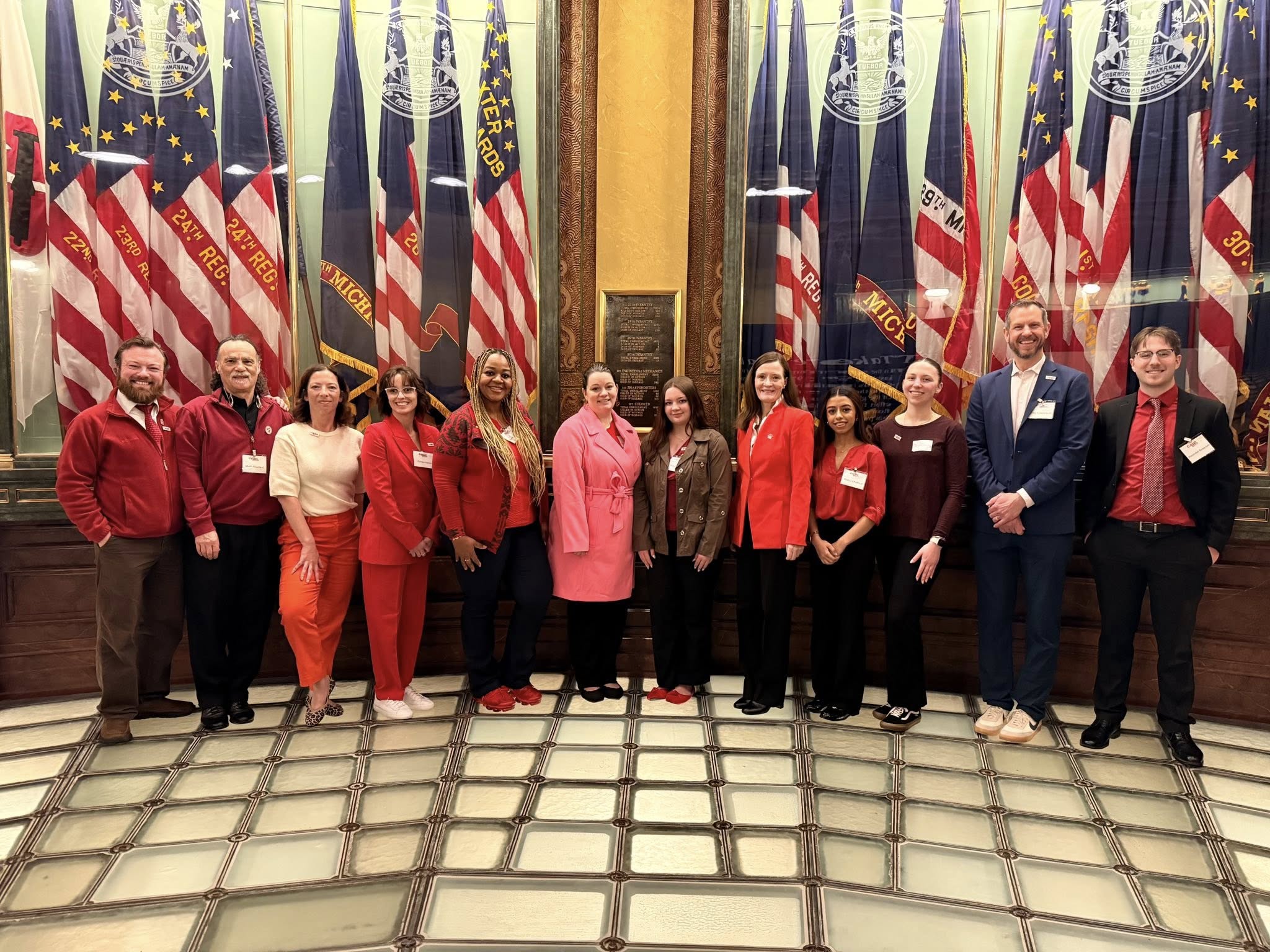
On Wednesday, March 11, 2026, advocates from across Michigan came to the Capitol to talk about something simple but critical: being prepared when a cardiac emergency happens.
Throughout the day, conversations with legislators and staff focused on ensuring schools and communities have the tools they need to respond. Advocates highlighted the importance of funding for Cardiac Emergency Response Plans (CERP), CPR in Schools implementation, and continued support for the CARES registry—practical, proven approaches that strengthen response systems and save lives.
What stood out most were the stories behind the policies.
Survivors shared how immediate CPR and access to an AED made the difference in their outcomes. Their experiences reinforced what we know: cardiac arrest can happen anywhere, and preparation directly impacts survival.
A Michigan State Trooper also shared his experience performing a recent CPR save, offering a real-world example of how training and quick action matter in those first few minutes.
Throughout the day, advocates connected with lawmakers in meaningful ways. Rep. Green acknowledged the group from the House gallery, and in one meeting, a legislative staff member shared her experience surviving two heart events at just 24 years old. Moments like these helped ground the conversation in why this work matters.
There was strong engagement from offices, with thoughtful questions about implementation and how these priorities fit within the state budget. That kind of engagement is important—it signals that these conversations are moving in the right direction.
Days like this are a reminder that policy and real-life impact are closely connected. When people share their experiences and connect them to practical solutions, it helps move things forward.
At the end of the day, the message is straightforward: being prepared saves lives. Ensuring schools and communities have the resources to respond isn’t complicated—but it is urgent.