Just try: A woman’s hands-only CPR saved husband
August 31, 2025
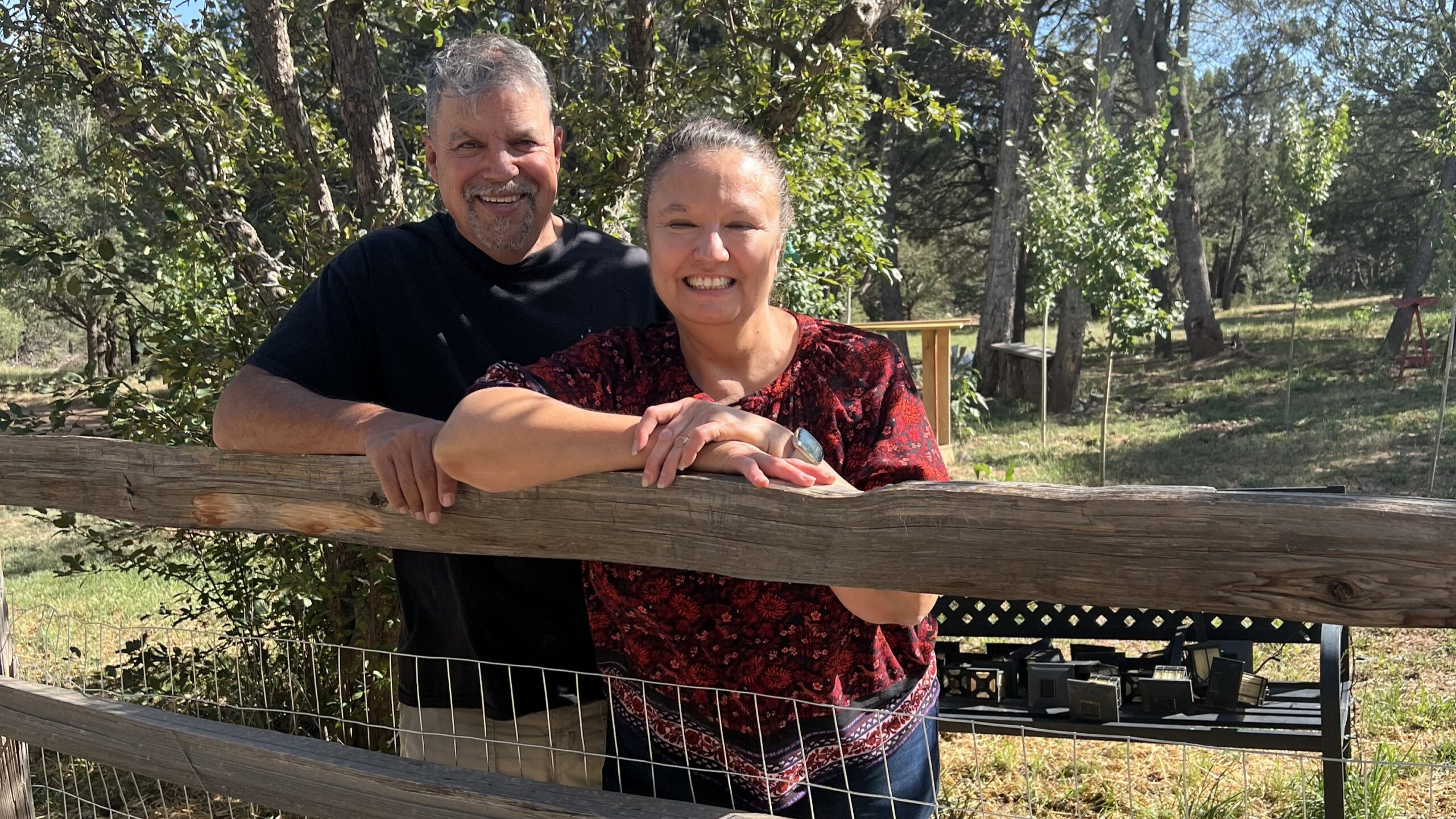
Norma Henderson had never taken any kind of CPR class, but she knew she had to do something.
Her husband, Ray, collapsed as he was walking out of their bedroom door and was not breathing.
“I just started CPR the way I had seen it on television,” Norma said. “I ran my hands down his chest and started pumping. I didn’t know how fast or anything, but I continued to pump.”
That evening back in February 2018 didn’t seem much different than usual, other than Ray had come home late from his job as a teacher following a major issue at school that meant a long day talking with students and parents.
“We went to bed, and he kept moving his arms toward his chest and saying he felt funny,” Norma said. “He ran to the bathroom and vomited, then said he was going to go sit outside the bedroom for a while, but he fell as he was going out. It took me a second to get to him, but he was already blue and not breathing.”
The universe seemed to be working against Norma and Ray. Before starting compressions, Norma ran to get her phone, but she got a message that “all circuits were busy” when she dialed 9-1-1.
She started compressions, then stopped briefly to dial 9-1-1 again, putting the phone aside to continue. A couple of minutes later, she heard a voice on the phone, an emergency operator asking about her emergency.
“I said my husband had collapsed, and she said she would talk me through it,” Norma said. “She told me where to put my hands and to think of the rhythm of the song, ‘Staying alive.’”
The 9-1-1 operator stayed on the line with Norma and called for paramedics. Norma performed compressions on Ray for about 30 minutes before paramedics arrived and took over. She never thought about being tired while doing it, she said.
“It was pure reaction. The adrenaline kicked in,” Norma said. “I had never done CPR, but I was sure gonna try. People say 30 minutes is a long time and difficult, but I don’t remember that. I was just like, ‘God help me’ and I kept pressing. I don’t remember being tired.”
Against the odds
Paramedics used an automated external defibrillator (AED) on Ray eight times and worked hard to establish a pulse again. His outlook was so bleak that the doctor told Norma to bring in all his family, start making funeral arrangements and a pastor gave Ray last rites. Yet, despite all the odds, Ray hung in there. Family members, school family members and friends – numbering in the hundreds – made their way to the hospital during that first weekend.
The doctor did what he called a ‘Hail Mary,’ and put Ray on an ECMO (Extracorporeal Membrane Oxygenation) machine, which temporarily takes over the function of the heart and/or lungs when these organs are failing. He survived his cardiac arrest, as well as several issues afterward that resulted in an even longer rehabilitation.
Ray returned to teaching for a year before retiring. He’s always willing to talk about what happened to him and served on the American Heart Association’s New Mexico Board. Educating people about CPR and quick action is a passion of his. During the year he returned to teaching, he helped train students on CPR.
“My students helped train 1,200 students in CPR and the use of an AED,” Ray said.
Norma also participated with Ray in multiple CPR courses. She doesn’t talk much about the harrowing experience, but she encourages everyone to learn CPR.
“I hope if I ever have to use it again, I can have the wits about me to just initiate it,” Norma said. “You never know when someone is going to need it. I would say to anyone facing that type of situation, just try, even if you don’t know how. That can make all the difference in the world. You are functioning as their heart. Don’t be afraid.”
That willingness to just take action saved Ray’s life.