Advocate Spotlight: Shayai Lucero
April 27, 2026
Speaking up and speaking out for tribal communities. How one Native woman’s survival ignited a movement to protect the hearts of her people.
Shayai Lucero still remembers the first time her heart faltered.
She was nine years old, growing up on the Pueblo of Laguna reservation in New Mexico, when her heartbeat suddenly surged into a frantic rhythm. At 13, she was diagnosed with an arrhythmia. Doctors told her parents to “keep an eye on it.” When she was 25, she had a cardiac ablation, but it didn’t totally take care of the problem. So, Shayai learned to listen closely to her own body – to pay attention to the signals that something wasn’t right.
She didn’t know then that her heightened awareness would one day save her life.
The day everything changed
Decades later, at 43, that familiar feeling slammed back into her chest. But this time it was stronger but felt different. Sharper. Deadly.
Living 45 miles outside Albuquerque, she also knew what distance meant. On the reservation, emergency responders cover vast rural areas; an ambulance could be a few miles away – or 100 miles.
“I knew the moment it happened,” she says. She looked at her husband and said the words no one wants to say: “I have to get to a hospital. Now.”
They rushed out the door. They didn’t stop to tell their children. Instinct took over. Every second mattered.
At the nearest hospital, doctors rushed to stabilize her before she was airlifted into a helicopter to Albuquerque. Only later did she learn the truth: She had survived a “widow maker” heart attack – a kind that often kills within minutes if treatment is delayed.
When a stent was finally placed – when her heartbeat steadied – a wave of realization washed over her.
“Wow. My life was saved,” she thought.
And then, just as powerfully: “I have a purpose.”
From survivor to storyteller
Shayai refused to keep her experience quiet. She knew too many in tribal communities lived far from emergency care. Too many didn’t recognize the warning signs. Too many didn’t survive.
She began sharing her story – first with neighbors, then with surrounding communities. She taught people how to spot the warning signs of heart attack and stroke. She urged them to trust their instincts, act fast, be brave enough to take action immediately when something seemed wrong.
She wanted everyone to know: Moments matter.
Building something bigger
Her message sparked something powerful.
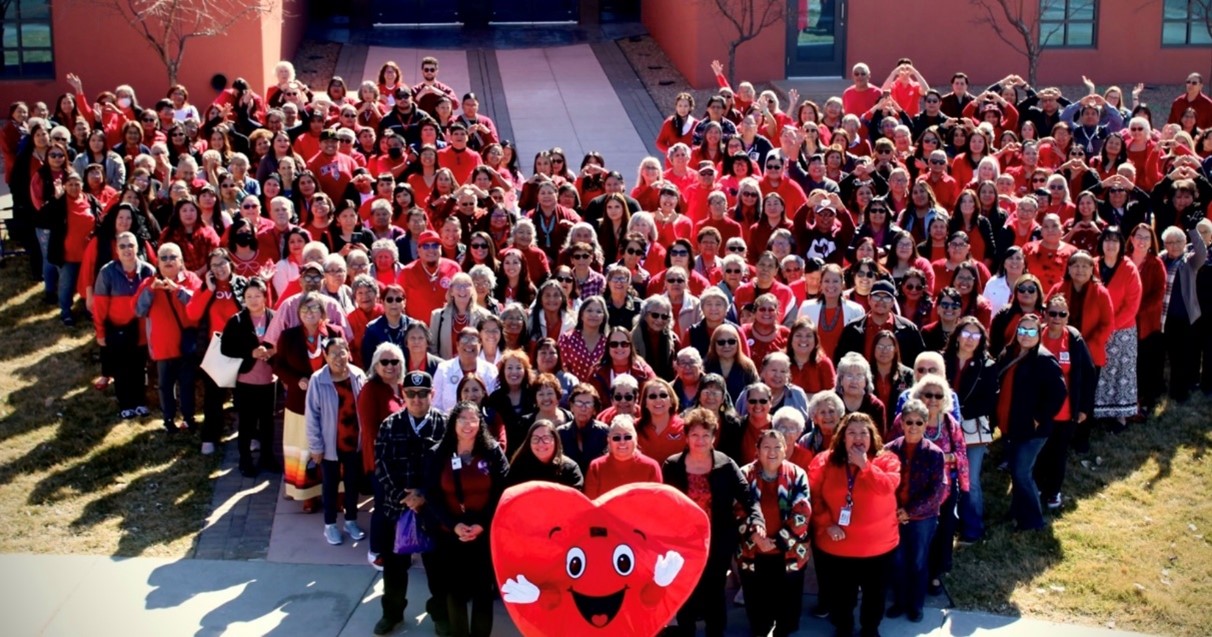
Shayai has spoken at and now helps to organize the Go Red for Native Women Healthy Heart Summit, a gathering of Native American women, men and allies from throughout New Mexico focused on heart health. What began as a simple idea became an annual event that continues to grow.
This year, more than 500 people attended. One woman later told Shayai the summit helped save her life.
Shayai didn’t seek recognition. But her leadership earned her the American Heart Association-New Mexico Go Red for Women 2023 Red Dress Award. For her, the impact meant far more than the honor.
A voice at every table
Shayai kept going.
She eventually became an Association board member – a place where her community urgently needed representation. She also became one of the thousands of Heart Association grassroots advocates nationwide.
She wrote letters to state and federal lawmakers. She penned opinion articles. She spoke on podcasts – and then on the national stage. She joined other Heart Association Heart Powered advocates in Washington, D.C. to urge lawmakers to support cardiac emergency response plans and AEDs in schools, especially on rural Indian reservations. She pushed for maternal and equitable health for tribal communities.
Her voice stretched beyond New Mexico, beyond reservation borders, beyond her own expectations.
“It’s bigger than me,” she says. “I am a voice for women, for the babies and children, for Native Americans.”
Listening to the heartbeat of a people
Because of leaders like Shayai, Native voices are stronger today in conversations about equitable health and policy change. Tribal communities are increasingly heard – not as an afterthought, but as an essential part of the conversation.
Shayai feels a responsibility to the Native community every day. She continues to speak up. She continues to show up. She continues to fight for the wellbeing of all her people.
“I have a lot to say,” she says. “There is so much change needed for all people’s health in our country. But when I speak, it’s so all Native people have a voice.”
Join the movement
To learn more about the American Heart Association’s Heart Powered movement – and how you can advocate for change – text HEART to 46839 or visit HeartPowered.org.
Photos courtesy the Lucero family.
American Heart Association Heart Powered advocate Shayai Lucero helped launch and organize the Go Red for Native Women Healthy Heart Summit. This year, more than 500 Native American women, men and allies attended.
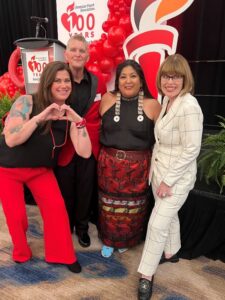
From left to right, survivor Liz Nauman, Southwest Region Grassroots Manager Chris Turner and American Heart Association Heart Powered advocate Shayai Lucero joined Heart Association CEO Nancy Brown in Washington, D.C., to celebrate the Association’s 100th Anniversary and to advocate for cardiac emergency response plans and AEDs in schools and on reservations.