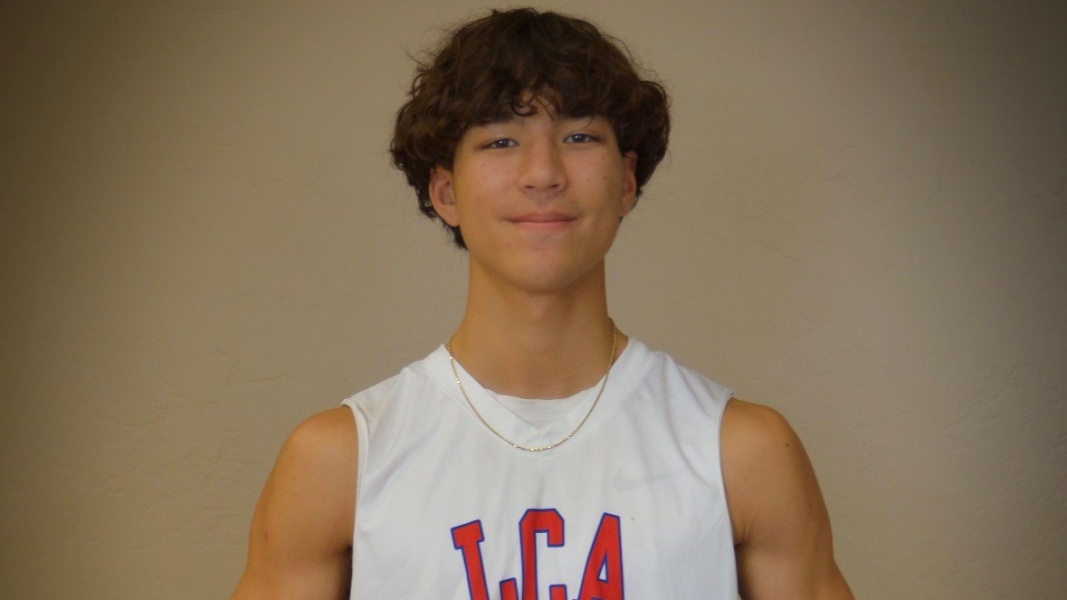
Advocate Spotlight: Magnus Miller
February 6, 2026
Oklahoma teen speaks out for CPR preparedness: ‘You’re the first responder until help arrives’
On an icy January morning in rural Oklahoma, Magnus Miller, team captain in the spring semester of his senior year, stepped off a bus ready to compete in a high school basketball tournament. A winter storm threatened to derail the game, and he knew his teammates would be disappointed if it was canceled, but the game went on.
As the team ran from the bus to the gym, sleet stung their faces. Once inside, they warmed up, stretched and focused on winning. But within the first two minutes of play, everything stopped.
Magnus heard his coach yell, “He’s out.” At first, he thought a player had stepped out of bounds. Then he spotted an opposing player on the half-court line. The teen appeared to be seizing.
Because of his lifeguard training, Magnus was immediately vigilant. He watched from the sidelines and asked a referee what was happening. Suddenly, the player on the floor went still.
Magnus realized no one was jumping into action fast enough. “From my lifeguard training, I knew seconds matter when someone goes down. The more time passes, the greater risk of brain damage.”
Magnus ran across the court. He cleared the player’s airway and tilted his head back to open it. Just 18 years old, Magnus took charge, directing nearby adults to help. He asked two people to give rescue breaths and assigned chest compressions to two others, rotating responders when needed.
Soon, someone brought an AED. A coach grabbed scissors and cut away the player’s jersey. Together, seven people – guided by one trained teenager – worked as a coordinated team. Their swift action made the difference between life and death.
Because icy roads significantly delayed emergency vehicles, EMS didn’t arrive for more than 30 minutes.
“Having CPR training is the reason I stepped in,” Magnus said. “No one second-guessed me because I was a kid. They all jumped in and helped, without hesitation.”
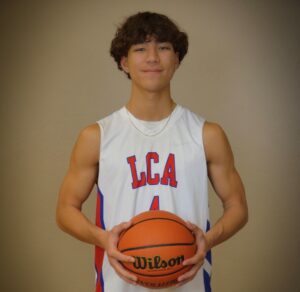
Thanks to his lifeguard training, teen Magnus Miller led a team that delivered CPR and used an AED after a fellow basketball player collapsed during a game. With an Oklahoma ice storm delaying EMS by more than 30 minutes, Miller was the first responder until help arrived.
Turning action into advocacy
After that day, Magnus turned his experience into action. He joined forces with the American Heart Association Heart Powered grassroots movement to advocate for cardiac emergency preparedness in schools and school athletics.
At the American Heart Association 2025 state advocacy day in Oklahoma City, Magnus urged lawmakers to ensure every school is prepared to respond to a cardiac emergency with a cardiac emergency response plan, CPR-trained staff and coaches, and accessible AEDs. Later that year, Magnus traveled to Capitol Hill in Washington, D.C., where he encouraged his elected representatives to fully fund the HEARTS Act, a law unanimously passed by Congress in 2024 that established a new federal grant program designed to ensure every school is equipped and prepared to respond to a cardiac emergency.
Magnus also encourages other young people to get CPR training. “Young kids can do more than people think,” he said, noting that he sees it all the time with fellow lifeguards. Research shows that children as young as nine years old can learn and retain CPR skills.
The Heart Association emphasizes that anyone can save a life. In every cardiac emergency, the real first responder is not always a uniformed professional but often a friend, family member or even a stranger nearby. The best way to save a life is being ready to take action by calling 911, beginning high-quality CPR and using an AED as soon as one is available.
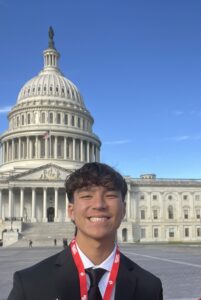
Just months after saving a fellow basketball player’s life, teen Magnus Miller met with state lawmakers in Oklahoma City and with members of Congress in Washington, D.C. As an American Heart Association Heart Powered advocate, he delivered a clear message: every school needs the resources to respond to a cardiac emergency.
A ripple effect of lifesaving skills
Since becoming a Heart Powered advocate, Magnus received the American Heart Association’s HeartSaver Hero Award, played in a charity basketball game, attended practice with the Oklahoma City Thunder professional basketball team, graduated as salutatorian of his class and began coursework at the University of Oklahoma.
He still works as a lifeguard and recently earned a promotion that allows him to train new hires. Now those skills ripple outward. “I get to teach others how to save a life.” According to the Heart Association, no medical background is required to learn CPR. People only need knowledge, courage and a willingness to act. As a Heart Powered advocate, Magnus believes that, “when you speak from the heart, you have the opportunity to save someone’s heart.”
To learn more about the American Heart Association’s Heart Powered movement, join us by texting HEART to 46839, or visit HeartPowered.org.
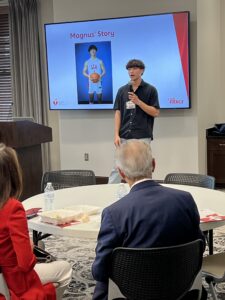
Magnus Miller humbly recounts the moment he helped save a fellow teen’s life during a basketball game in rural Oklahoma. Now, he urges state and federal leaders to secure funding, so others are prepared to be the first responder until help arrives.