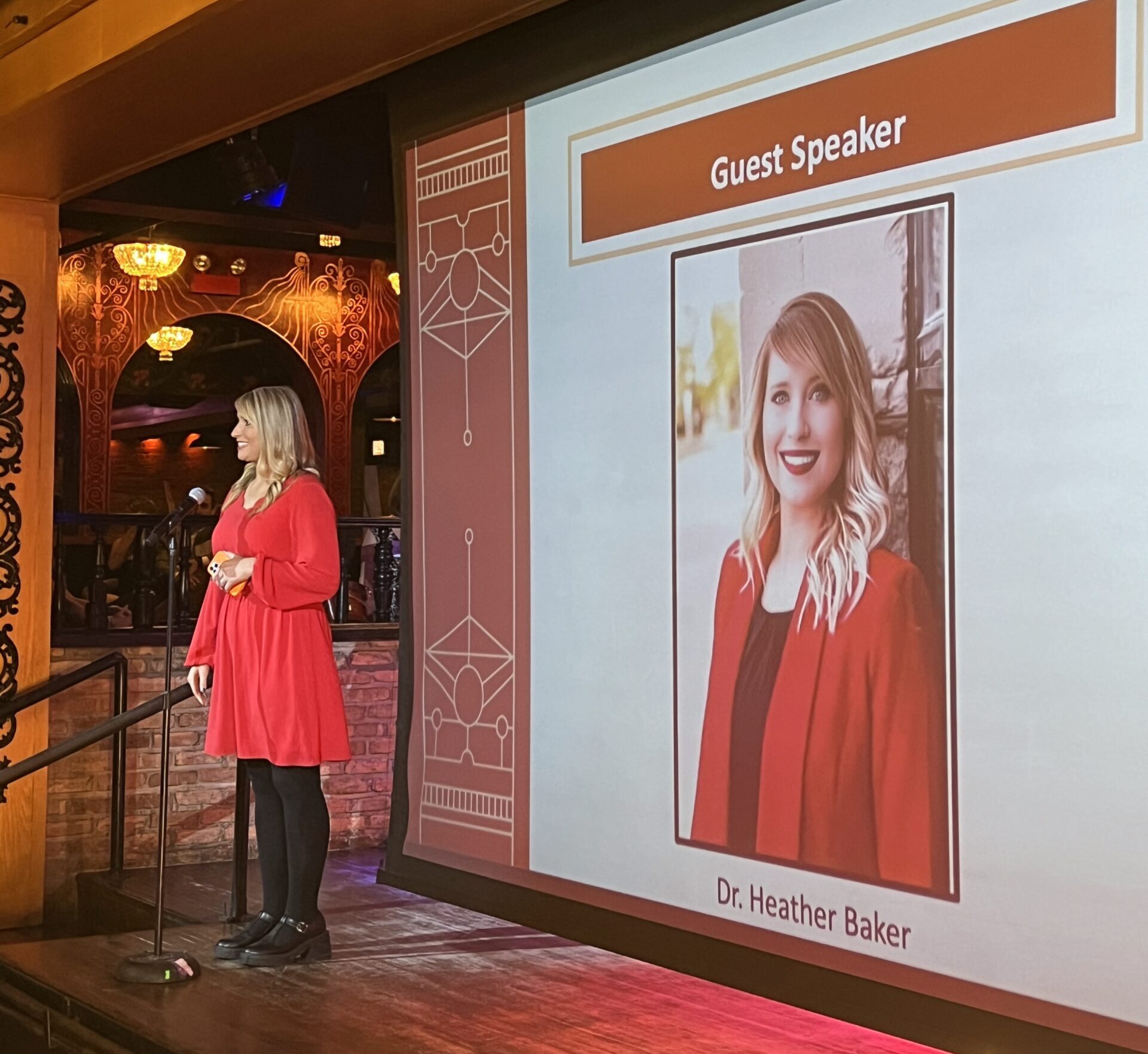
Advocate Spotlight: Heather Baker
July 14, 2025
In 2018, Heather Baker was a healthy 28-year-old in her first year as a school district curriculum director. Despite waking up with a terrible headache, she was not going to miss work. She drove 50 minutes through winding country roads near her Illinois home to attend multiple meetings at different locations. Everything seemed fine until Heather returned to her school.
“I was laughing, joking with my colleagues and suddenly I felt really dizzy,” she said. “I tried to say, ‘I don’t feel well,’ but I wasn’t making sense. I took one step and fell face first into the table and dropped dead to the floor of sudden cardiac arrest.”
Some thought she was having a seizure. Fortunately, multiple school staffers had been trained in CPR by the American Heart Association a month earlier. They called 911 immediately. Bill Faller, who was superintendent at the time, recognized from the training that her labored gasping was agonal breathing, a critical sign of a life-threatening emergency such as cardiac arrest. He started Hands-Only CPR. Middle school principal Tim King used an automated external defibrillator, or AED, to shock her heart three times. Heather was alive, but not conscious, when the fire department arrived 15 minutes later.
At the hospital, she was placed in a medically induced coma. Her family was told she would likely have brain damage and be unable to walk or talk because of the oxygen lost.
“Very fortunately, I did wake up on my own the next morning, sassy as ever, telling jokes,” she said.
She was diagnosed with drug-induced long QT syndrome, a disorder of the heart’s electrical system. It was likely due to a medication that in some people can cause a depletion of potassium, which is important in guiding the heart’s electrical system, and, in this case, affected her heart rhythm. Heather received a subcutaneous implantable cardioverter defibrillator, which is a device that regulates abnormally fast heart rhythms. She spent a week in the hospital and a week recovering at home.
“I was so lucky that the people in my building, coincidentally, had learned CPR and knew what to do,” she said.

Since that fateful day in 2018, Heather gave birth to her son, Easton, who was born with a rare heart condition. “There was a lot of special care taken with both of us throughout my pregnancy,” she said, adding that he is now thriving. “Helping him navigate his own heart journey, has been a really proud experience for me.” With her own son at risk of cardiac arrest, Heather was more motivated than ever to make Illinois schools safe for everyone, including Easton.
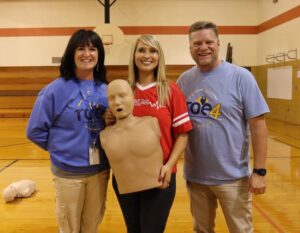
Heather became a certified CPR instructor and has trained more than 5,000 people. Now 35 and an elementary school principal, she completed her doctorate and published research on cardiac-emergency preparedness in schools. She was also a key advocate working with the American Heart Association to pass Cardiac Emergency Response Plans (CERPs) in her home state of Illinois. CERPs are written documents that establish specific steps to reduce death from cardiac arrest in school settings.
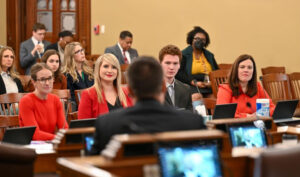
Testifying in front of a key committee, Heather used her own story and research to propel CERPs forward in the Illinois legislature. On the day that CERPs passed, she was watching the unanimous votes be cast from inside the statehouse.
Today, Heather continues to advocate with the American Heart Association for amendments to the law, including required drills to increase schools’ preparedness for cardiac emergencies. She remains dedicated to using her voice and her story to make schools a safer place for students, staff, and visitors.