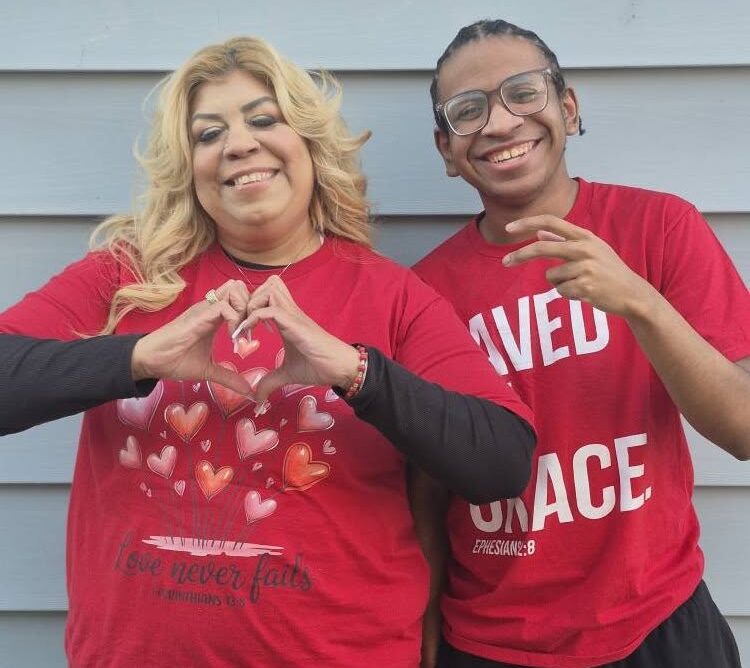
Advocate Spotlight: Amarion Sanchez-Thompson and Cynthia Sanchez
July 13, 2026
On an ordinary Sunday in November 2025, 18-year-old Amarion Sanchez-Thompson’s life changed in an instant. At home in Hutchinson, Kansas, Amarion suddenly went into cardiac arrest and collapsed in the bathroom. His mother, Cynthia Sanchez, was nearby when she heard him gasp for air and then a loud crash.
“I yelled his name, and he didn’t answer,” Cyndi recalled. “I heard him gasp again and then a boom.”
She rushed to find her son unconscious and not breathing.
In the midst of every parent’s worst nightmare, Cynthia called 911. The dispatcher immediately instructed her to put the phone on speakerphone and begin hands-only CPR. Staying on the line, the dispatcher calmly coached Cynthia through every chest compression as she fought to save her son’s life.
“Three or four minutes of CPR can seem like an eternity,” Cynthia said. “It was very hard to stay focused. Is my child slipping away from me? I need to get him back.”
For several critical minutes, Cynthia performed CPR until emergency responders arrived. Paramedics then shocked Amarion’s heart three times before restoring his pulse and rushing him to the hospital.
Doctors later told the family that the CPR Cynthia provided before first responders arrived made the difference between life and death.
After being transferred to Wichita, Amarion spent several days in intensive care and was placed on life support. When he finally woke up, one of his first questions was, “Mom, did I die?”
Against the odds, Amarion survived with no lasting brain damage, an outcome doctors described as incredibly rare after cardiac arrest. While his physical recovery continues, the emotional impact of nearly losing his life has been just as significant.
“You think about how you almost died,” Amarion said. “People always ask how I’m doing physically, but mentally it’s hard to hear about how you almost died.”
Today, Amarion calls his mother his hero.
“She saved my life, and I’m very thankful for that,” he said. “If my mom didn’t know CPR, I probably wouldn’t be here.”
Now, Amarion and Cynthia are turning their experience into action. Together, they share their story across Kansas to raise awareness about the lifesaving power of CPR and the importance of telecommunicator-assisted CPR, where 911 dispatchers guide callers through chest compressions during a cardiac emergency. This practice is called Telecommunicator CPR (T-CPR). Alongside the Association, Cynthia and Amarion are leading the fight to mandate that all 911 dispatchers are taught T-CPR.
Their advocacy has included media interviews, public speaking opportunities, and working alongside the American Heart Association to support state efforts that ensure every Kansan can receive CPR instructions over the phone when every second counts.
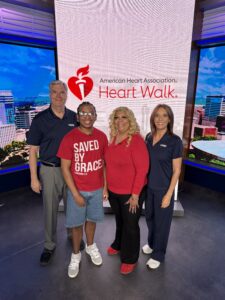
Their message is simple: cardiac arrest can happen to anyone, anywhere, at any time. Learning Hands-Only CPR takes only minutes, but those minutes can mean the difference between life and death.
Because of his dedication to sharing his story and helping others understand the importance of CPR, Amarion has become a powerful advocate for survival, awareness, and action. His story is proof that when bystanders are empowered to act, and when a dispatcher, a mother, and a community work together, lives can be saved.