Advocate Spotlight: Emerson Kelley
May 27, 2026
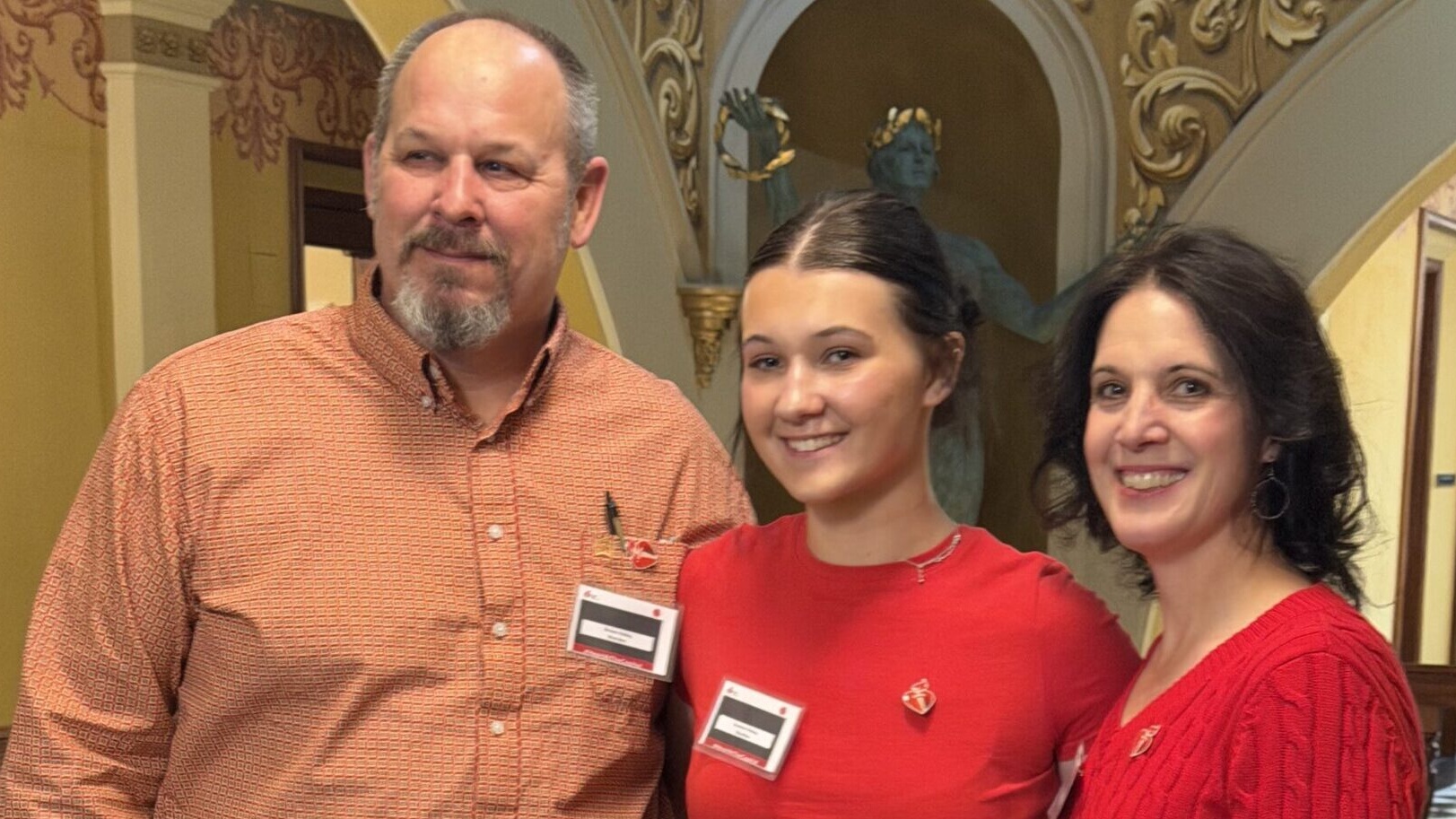
Above photo: Emerson Kelley with her parents, Shawn and Lindsay
During the 2026 Wyoming Legislative Session, advocates from across the state traveled to Cheyenne to talk to their lawmakers about requiring cardiac emergency response plans in schools. One of the youngest advocates, Emerson Kelley, spoke to the group about surviving cardiac arrest as a 10-year-old. She emphasized how her school had a plan, and that was what helped save her life. Read Emerson’s story in her own words.
I was 10 when my heart stopped on a cold February morning outside Woodland Park Elementary. One moment I was walking into school. The next, I collapsed without warning. My life hung in the balance, and the only reason I am alive to write this today is because my school had a plan, an AED and trained people who acted without hesitation.
My school nurse, Noelle Mena, who had just re-upped her CPR training the previous week, recognized cardiac arrest immediately. She performed CPR and used an AED to shock my heart back into rhythm. I was rushed first to Sheridan Memorial Hospital then life‑flighted to children’s hospital in Aurora. Four days later, I received an implantable cardioverter-defibrillator (ICD), and pacemaker, and I was diagnosed with long QT syndrome – a condition I’ll manage for the rest of my life.
Today, I am a typical 16‑year‑old girl. I play softball year‑round. I’m working toward a certification for my dream job: wildland firefighting. I’m alive. I’m thriving. But I am also one of the lucky ones. My survival was not just because of one hero. It was because of a system that worked – a system built on preparation, training, and access to lifesaving tools.
That system should exist in every Wyoming school. But right now, it doesn’t.
Earlier this year, my family and I traveled to Cheyenne alongside the American Heart Association to urge lawmakers to pass House Bill 115, which would have required every public school to adopt a Cardiac Emergency Response Plan (CERP). The bill called for evidence‑based emergency steps, trained personnel, and AEDs accessible within three minutes – the same elements that saved my life.
Emerson Kelley with WY State Rep. Andrew Byron, who sponsored a bill requiring cardiac emergency response plans in schools.
The bill did not make it through during the short budget session, but we will keep working because Wyoming’s kids deserve better.
Every year, more than 23,000 children experience cardiac arrest outside a hospital in the U.S. Survival depends on immediate CPR and quick access to an AED. In schools that have both, survival rates can reach 70% – seven times the national average.
Cardiac arrest isn’t just a sports issue. It doesn’t only happen on football fields. It happens in hallways, playgrounds, cafeterias, and classrooms – anywhere kids live and learn.
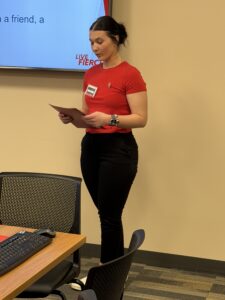
Emerson speaking to other advocates at lobby day.
Just because I was blessed with a miracle does not mean this won’t happen somewhere else. The next child deserves the same chance I had. Their parents deserve the same hope mine were given.
Every second matters. Every life matters. And every school must be ready.