Advocate Spotlight: Kyle Peckham
April 29, 2026
Failure is not an option when it comes to kids’ lives
How one athletic trainer found his voice – and helped make Vermont schools safer
Kyle Peckham never imagined himself changing a law.
He didn’t see himself standing before state legislators or talking about public policy. He wasn’t chasing recognition or a title. He was simply an athletic trainer who cared deeply about the kids he worked with every day.
But sometimes, caring is what compels someone to step forward.
Kyle had seen how quickly an ordinary moment on the field could turn into an emergency. He knew how fragile those first few minutes can be – and how much it matters to have the right tools close at hand. Watching young athletes give everything they had, day after day, he believed they deserved adults willing to do the same for them.
So, when Kyle learned there were serious gaps in access to automated external defibrillators (AEDs) at school sports events, he couldn’t shake the feeling that something needed to change.
He didn’t think of himself as an advocate.
He just thought of the kids.
And that was enough.
Finding his voice
Kyle wasn’t trying to be a policy expert. He was trying to make sure no coach, referee, parent or student ever found themselves helpless in the most critical moments of a cardiac emergency.
What started as a few emails to state legislators slowly grew into dozens of messages, calls and conversations. He spoke plainly and honestly about what he saw on the ground – the reality of gyms without athletic trainers, practices held after hours when an AED wasn’t anywhere nearby because it was in a locked building instead of outdoors at practice.
“An improved law would save kids’ lives,” Kyle told lawmakers. And because he believed that so deeply, he kept going.
He organized a symposium along with institutes and coalitions across Vermont to improve sport safety policies across all possible catastrophic events (including cardiac arrest). In athletic training, the focus is on being equipped with emergency action plans that include all these emergent scenarios. The event connected school nurses, administrators, coaches, local EMS and the American Heart Association. These weren’t abstract discussions. They were real people talking about real scenarios – and how easily those moments could go wrong without preparation.
Kyle became a grassroots advocate with the Heart Association – one of thousands nationwide. When he first testified before Vermont legislators, he felt unsure. But as he began describing what it looks like when someone collapses and help isn’t immediately available, the fear gave way to purpose.
He wasn’t there to lecture.
He was there to paint a picture of what protection and preparedness could look like when people work together.
A simple plan that changed everything
Kyle believes the most effective safety plans are the ones people can follow.
He wrote his school’s CERP in under an hour. Then he helped nurses, coaches and administrators across Vermont find the same template and tools to create their own. The conversations were never intimidating or overly technical. They were human – grounded in the shared hope that if the worst ever happened, someone would be ready.
Kyle talked about the details that make all the difference: where AEDs should be placed so anyone could reach them quickly, how to keep batteries fresh and how to make sure buildings aren’t locked during after-hours drills, games or practices.
Every detail mattered.
Because for Kyle, this wasn’t theoretical.
It was personal.
“Drop the dummy.” And rise to the challenge.
The first time Kyle ran a “drop the dummy” drill, no one rushed.
People hesitated. They weren’t sure where to go. It took more than five minutes for someone to bring an AED to the practice manikin.
Five minutes.
Kyle felt his heart sink – but instead of frustration, he felt determination. Athletes don’t shy away from challenges. They rise to them. So, he made the drill part of regular practice – just another way to get better.
Weeks later, the same group reached the manikin and placed the AED in just 30 seconds.
The field erupted in cheers.
Kyle saw pride in the students’ faces – the kind that comes from knowing you can step up when it counts. Soon, schools across Vermont began sharing their own times, turning preparedness into something empowering instead of frightening.
A win that mattered
Enacted in 2025, H.247 was a bill that would require school districts and independent schools in Vermont to develop cardiac emergency response plans. As an American Heart Association Heart Powered advocate, Kyle testified on behalf of the bill, and answered lawmakers’ questions about why these plans are so important to have in schools. As a trainer, his testimony directly led to passage of the bill.
When Kyle heard that H.247 had passed, he didn’t celebrate like someone who had won a policy battle.
“It felt like winning a game you’ve practiced for,” he said. “Something you poured yourself into. Something that matters.”
Thanks to Kyle’s steady persistence, Vermont’s students will be safer. Coaches will feel more prepared. Communities will feel more confident. And the law will quietly protect lives for years to come.
Today, American Heart Association Heart Powered advocates are advocating for similar policies in states nationwide. Advocates like Kyle can change laws – all it takes is coming together to act.
Want to be part of the movement?
Join the American Heart Association Heart Powered network and help create change driven by people who care.
Text HEART to 46839 or visit HeartPowered.org.
Photos courtesy American Heart Association Eastern States region.
Caption:
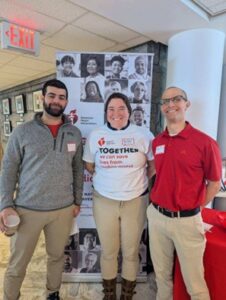
Kyle Peckham (left), lifelong Vermonter and American Heart Association Heart Powered advocate, joined the American Heart Association’s lobby day to speak with state legislators about the importance of AEDs and CERPs in schools at the state capitol in 2025.