Updated Science-Based Guidance on Healthy Eating!
April 1, 2026
It’s no secret that the food we eat has a major impact on our heart and brain health. New dietary guidance from the American Heart Association says that a lifelong healthy eating pattern can significantly reduce your risk of heart disease and stroke. The American Heart Association issues evidence-based dietary guidance about every 5 years. The 2026 guidance updates the Association’s previous 2021 recommendations with the latest in evidence-based science aligned with reducing cardiovascular disease risk, improving quality of life and saving lives.
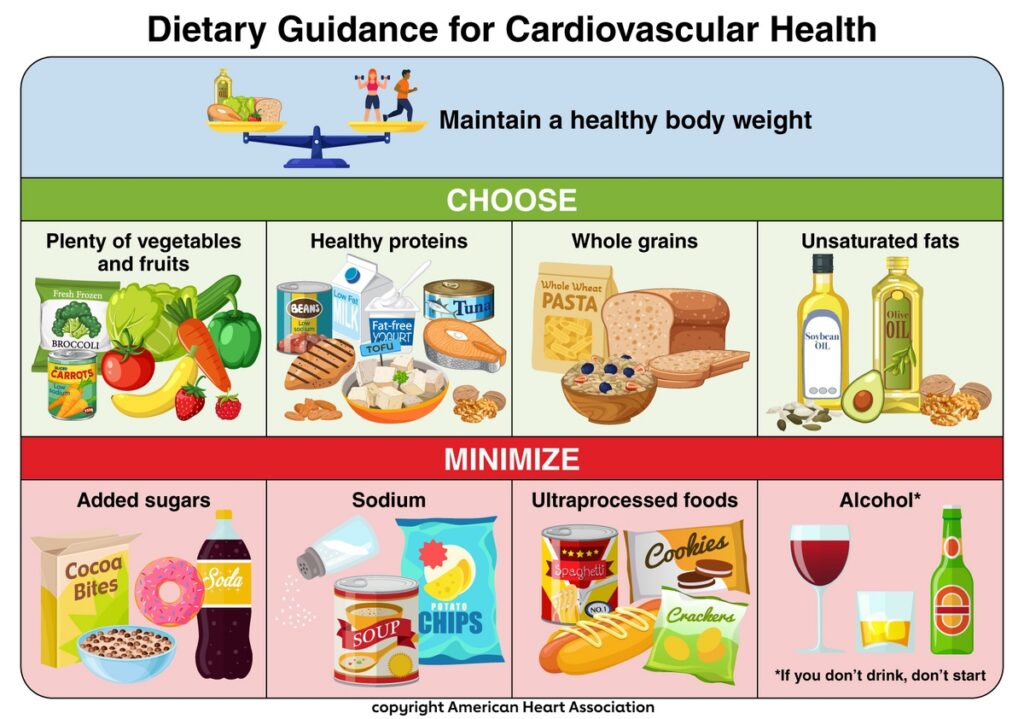
These tips may look familiar, as they haven’t shifted greatly from our 2021 recommendations. This update outlines nine key features of a heart-healthy eating pattern. They are:
- Try to balance how much you eat with how active you are: This is important to reach and maintain a healthy body weight.
- Eat plenty of vegetables and fruits and choose a wide variety: Include different colors, textures and types of produce, and remember, even canned and frozen can be nutritious and affordable.
- Choose foods made mostly with whole grains rather than refined grains: Foods such as whole wheat bread, brown rice and oatmeal are better choices than refined grains including white bread or white rice.
- Choose healthy sources of protein: Shift from meat to plant-based sources such as legumes, including beans, peas and lentils, along with nuts and seeds; regularly consume fish and seafood; select low-fat or fat-free dairy products; and if red meat is desired, choose lean cuts, avoid processed forms and limit portion size.
- Choose sources of unsaturated fats in place of sources of saturated fat: Replace saturated fats with healthy unsaturated fats, including those from nuts, seeds, avocados and non-tropical plant oils.
- Choose minimally processed foods instead of ultra processed foods: Go with foods close to their natural state, with minimal added ingredients, rather than those that are highly processed with additives.
- Minimize intake of added sugars in beverages and foods: Limit the sugar-sweetened beverages you drink and the foods with added sugar you eat.
- Choose foods low in sodium and prepare foods with minimal or no salt: Be aware of hidden sources of sodium in commercially prepared and packaged foods and season your food with healthier options such as herbs, spices or lemon instead of salt.
- If alcohol is not consumed, do not start; if alcohol is consumed, limit intake: Alcohol can increase your risk for high blood pressure and other health conditions, so if you don’t drink, don’t start.
You can read more about the science and recommendations for a healthy diet here.