
Rhode Island Legislators Participate in “CPR Challenge” as Advocates Push to Strengthen Cardiac Arrest Preparedness in Schools to Save Lives
February 26, 2026
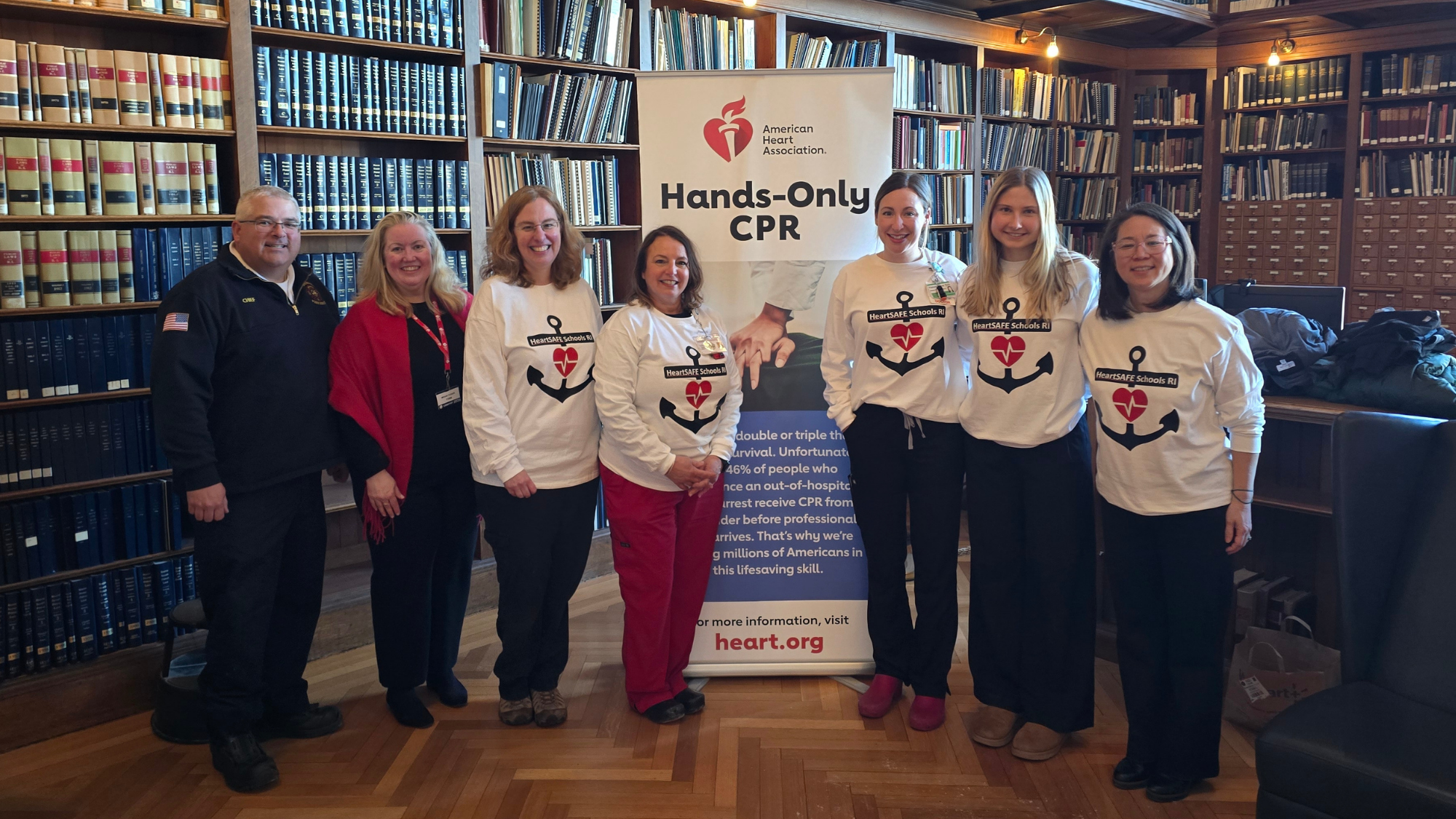
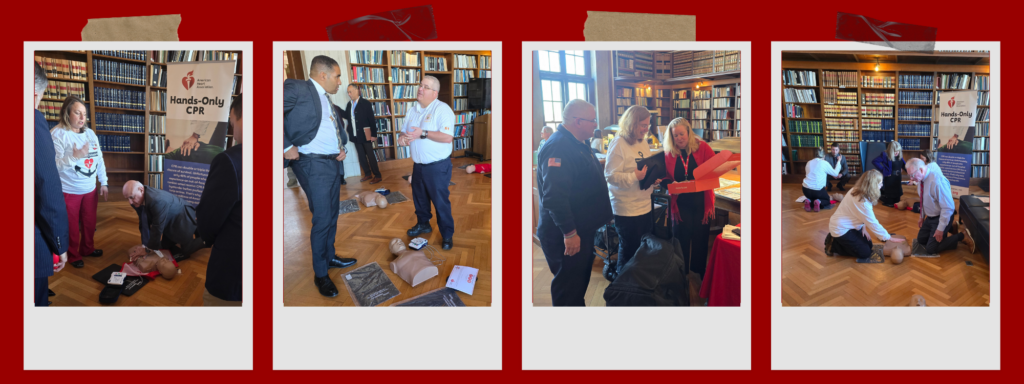
On February 3rd, more than 50 legislators and staff learned the lifesaving skill of hands-only CPR as part of a “CPR Challenge” that we hosted at the RI State House to kick off American Heart Month. The event was held in collaboration with Senate Majority Whip David Tikoian (D-District 22) and House Deputy Majority Leader Thomas Noret (D-District 25). Both are former first responders.
Heart Powered advocates, physicians, and local board members were on hand to talk with senators and representatives about our priority legislation (S. 2079 by Senator Tikoian and H. 7027 by Rep. Noret) that would require a cardiac emergency response plan (CERP) in all Rhode Island high schools and middle schools, and at all school athletic venues and events. The proposal builds upon an existing Rhode Island law that requires high schools and middle schools to maintain on-site AEDs. The AED requirement is an important foundation, but it’s not enough. Plans are needed to ensure staff are prepared to act in the event of a cardiac arrest when every second counts and an immediate response is critical.
“As a first responder, I can tell you this is a no-brainer. Having plans in place to quickly activate in the event of a cardiac event saves lives. When we have practiced CPR, know to call 911, and know where the nearest AED is located, more people will survive a cardiac arrest,” said Chief John H. Potvin, MPH, BS, NRP, CEMSO, Chief of Department, Hopkins Hill Fire District, Director of Fire/Rescue Communications, Town of Coventry, and American Heart Association Southern New England Board Member.
“We all saw what happened on national TV when Damar Hamlin of the Buffalo Bills collapsed on the football field. He survived because trained responders, an AED, and a rehearsed emergency plan were in place. That level of readiness should not be reserved for professional athletes. Every child in Rhode Island deserves the same chance of survival,” said Dr. Elizabeth Jacobs, pediatric emergency physician at Hasbro Children’s Hospital and founder of HeartSAFE Schools Rhode Island.
More than 356,000 people experience cardiac arrest outside of a hospital in the United States each year. Without the proper response from people nearby, 90% of these incidents will result in death. It is estimated that more than 23,000 children under the age of 18 experience cardiac arrest outside of a hospital annually in the United States and 40% of these incidents are sports-related.
Whether in the classroom or on the playing field, having a plan in place to enable faculty, staff, and students to quickly and correctly respond to a cardiac emergency can save lives. CPR, if performed immediately, can double or triple a person’s chance of survival. In schools with AEDs, approximately 70% of children survive cardiac arrest – 7 times the overall survival rate for children.
Schools are a gathering place for community events. Parents and community members are often at schools for plays, concerts, and athletic events, so schools having a regularly reviewed and practiced plan can have a tremendous impact.