
From the Southeast to Capitol Hill: Advocates Champion Funding the HEARTS Act
November 4, 2025
On October 28, 2025, nearly 150 American Heart Association Heart Powered advocates gathered in Washington, DC for the Association’s Hearts on the Hill fly-in. Their mission: urge Members of Congress to fund the HEARTS Act— bipartisan legislation passed last year to help schools implement cardiac emergency response plans, train staff and students in CPR, and ensure access to AEDs.
Among them were fifteen passionate advocates from the Southeast Region who brought deeply personal stories to Capitol Hill. Cardiac arrest survivors, families who have lost loved ones, and health professionals shared experiences that illustrated both the power of preparedness – and the heartbreak when it’s missing. Their voices echoed a clear and urgent message: in a cardiac emergency, every second counts – and every school must be ready to respond.
Read more below about the Southeast Region advocates who shared their stories and helped drive the message forward on Capitol Hill.
Alabama
Representing Alabama were Charlotte Richey and her mother, Rachel. Charlotte, a high school freshman, survived cardiac arrest during PE class in March thanks to the swift response of school staff who performed CPR and used an AED. Rachel shared their story during the program, reminding attendees of the life-saving importance of school preparedness.
Also lending her voice to Alabama’s delegation was Dionne Mack, a member of the AHA Alabama Advocacy Committee. Her advocacy began after losing her son, Tyrell Spencer, to cardiac arrest while playing basketball at age 18. Tyrell’s arrhythmia was undiagnosed, and his death sparked Dionne’s commitment to improving school emergency preparedness and protecting the hearts of student athletes. She advocated tirelessly for the Tyrell Spencer Act, signed into Alabama law in 2023, to help schools respond to cardiac emergencies.

Rachel Richey, Charlotte Richey, Dionne Mack
 Florida
Representing Florida was Dr. Andrea Iglesias, a heart attack survivor and AHA Greater Miami/Ft. Lauderdale Board member. She survived a widow maker heart attack postpartum in 2021, thanks to her husband’s quick action. Her advocacy deepened when her young son was diagnosed with a congenital heart defect. She now works to ensure every child has access to the care and resources they need to grow up healthy and thrive.
Joining her was Paris Donaldson, a college student who survived cardiac arrest in high school, shared her personal story with lawmakers.
Also part of Florida’s delegation were Veronica Tomor, a clinical pharmacist, and her son, Christopher Garofalo. Veronica is a former AHA Florida Advocacy Committee member and a strong voice for stroke awareness and prevention. Christopher, a college student, leads tobacco-free efforts on campus.
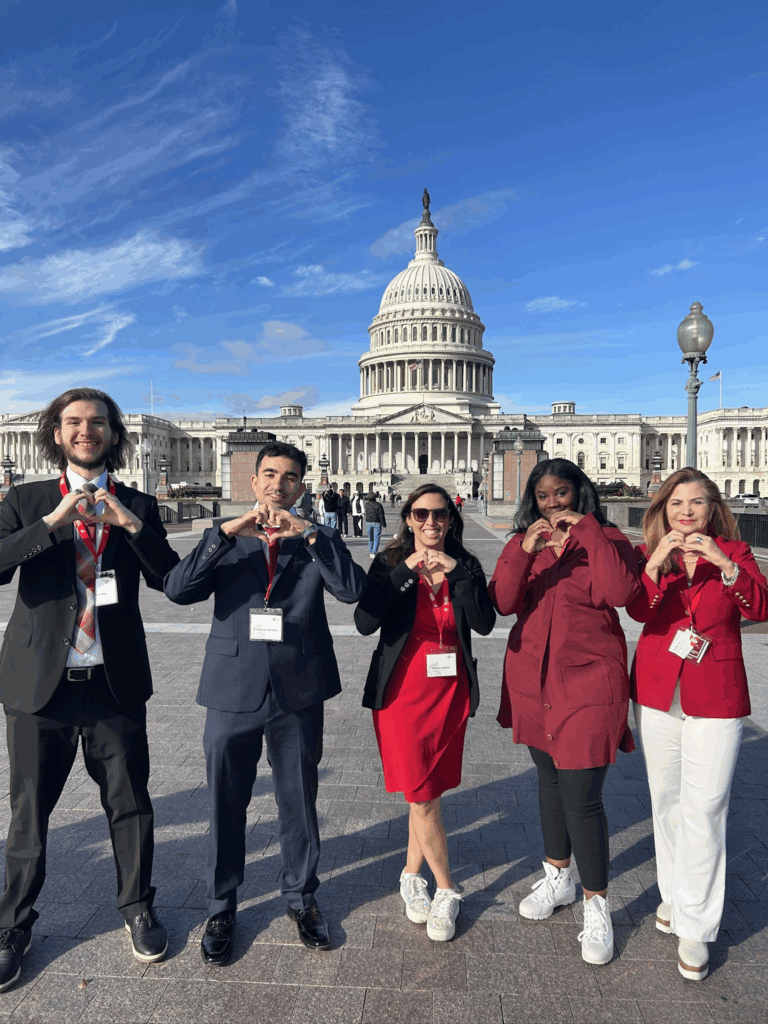
Branden Reis (AHA), Christopher Garofalo, Dr. Andrea Iglesias, Paris Donaldson, Veronica Tomor
Georgia
James Fudge, a cardiac arrest survivor, attended with his mother, Andrea Towns-Byrd. They shared James’s story to highlight the importance of CPR and AED access in schools. Andrea spoke passionately about the importance of CPR education and AED training—not only to save lives but to explain why James is still here today. She also emphasized the healing journey and what it takes to support a heart patient on the road to recovery.
Emma Vann, a college student born with a congenital heart defect, also represented Georgia. Her advocacy journey during undergraduate Public Health studies, when she advocated with the American Heart Association for Cardiac Emergency Response Plans (CERPs) in Georgia schools. That experience sparked her passion for health policy, and she now pursues a Master of Public Health degree with a focus on Health Policy and Management.
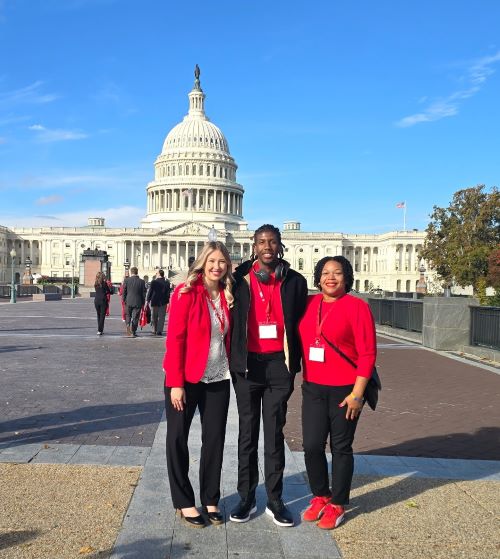
Emma Vann, James Fudge, Andrea Towns-Byrd
Louisiana
Kristen Cobb Simpson, a member of the AHA Greater New Orleans Board of Directors, attended in memory of her nephew, Burke Cobb, who tragically passed away from sudden cardiac arrest at school in 2012 at age 15. Kristen helped champion the Burke Cobb Act, passed in Louisiana in 2014, which requires high school students to learn CPR before graduation. Kristen’s advocacy underscores the urgent need for policies that ensure schools are equipped to respond when every second counts.
Joining Kristen was Charette Dellagatta, a cardiac nurse specializing in heart failure. Charette knows firsthand the prevalence and impact of sudden cardiac arrest and the lifesaving potential of CPR, AED access, and education. She is committed to amplifying the voices of her patients and community. Her passion for systemic change drives her advocacy for policies like the HEARTS Act, which would ensure schools have the tools and training to save lives.
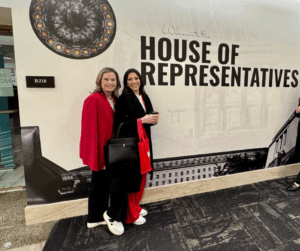
Kristen Cobb Simpson, Charette Dellagatta
North Carolina
Dana Davis, a cardiac nurse and former AHA North Carolina Advocacy Committee member, represented North Carolina. With years of clinical experience and a deep understanding of the impact of sudden cardiac arrest, Dana brought a powerful voice to the conversation around school preparedness. Her advocacy is rooted in both professional expertise and a commitment to ensuring every student has access to life-saving resources like CPR training and AEDs.

Dana Davis
South Carolina
Brenda Jones, a heart survivor and former AHA South Carolina Advocacy Committee member, represented South Carolina. Brenda’s personal journey with heart disease has fueled her dedication to raising awareness and promoting prevention. Her presence at Hearts on the Hill served as a testament to the importance of survivor voices in shaping policy and inspiring action.
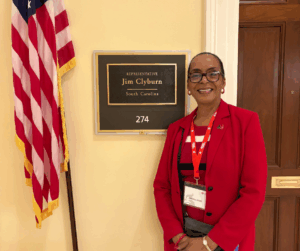
Brenda Jones
Tennessee
Twila Layne, who serves on the AHA Chattanooga Board of Directors and chairs the Association’s Southeast Emergency Cardiac Care Committee, represented Tennessee. Twila also owns a CPR training business and has trained thousands in life-saving skills. Her dual role as a business owner and regional leader in emergency cardiac care advocacy gives her a unique perspective on the importance of equipping schools and communities with the tools and training needed to respond effectively to cardiac emergencies.
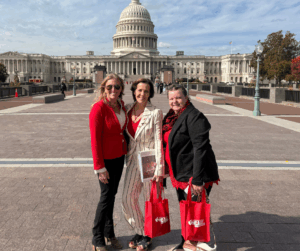
Twila Layne, right, with fellow advocates.